We believe healthcare is not only about treating disease— it is about helping people stay stronger, healthier, and independent throughout every stage of life.
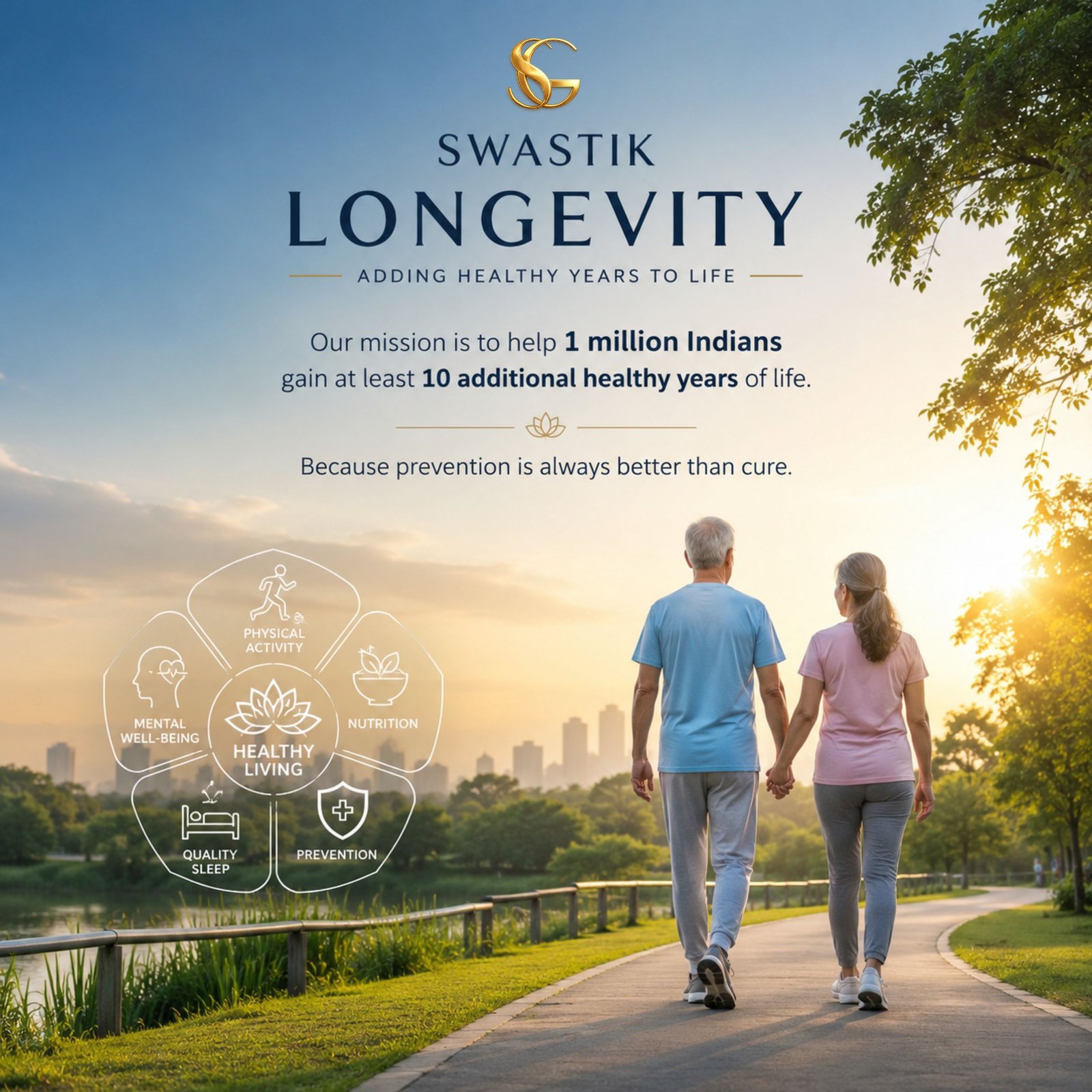
Our mission is to help 1 Million Indians gain at least 10 additional healthy years of life through preventive healthcare, nutrition, exercise, mobility, healthy ageing and early intervention.
Healthy Years Added
We empower individuals with science-based guidance on healthy ageing, mobility, nutrition, strength, bone health, and disease prevention so they can enjoy a healthier, more active, and independent life.
Practical, evidence-based guidance to help you stay stronger, healthier and independent at every stage of life.
Explore expert-designed learning modules that empower you with practical, science-backed knowledge to live a healthier, stronger and more independent life.
At Swastik Longevity, we believe longevity isn't simply about living longer—it's about living better. Every step you take today, from staying active and eating well to prioritizing sleep and preventive care, builds a healthier tomorrow.
Our mission is to empower individuals with evidence-based knowledge and practical guidance so they can enjoy more active, independent and fulfilling years of life.
Adding years to life is important — but adding life to those years is what truly matters.
Protect your knees today for a healthier tomorrow.
Knee replacement is not an inevitable part of ageing. Many people can delay or even avoid surgery through early diagnosis, lifestyle changes, weight management, strengthening exercises, physiotherapy and timely medical care.
Understanding how to protect your joints today can help you stay active, independent and pain-free for many years.
Early care can preserve your knee cartilage, reduce pain and improve mobility.
Did You Know? Even a small reduction in body weight can significantly reduce the load placed on your knees during walking and daily activities.
Protect your bones today to stay active and independent for life.
Bone loss often begins silently after the age of 40. Without proper nutrition, exercise and regular health check-ups, bones become weaker and more prone to fractures.
The good news is that healthy lifestyle habits, adequate calcium, Vitamin D and resistance training can significantly improve bone strength and reduce the risk of osteoporosis.
Healthy bones support better mobility, balance and independence throughout life.
Did You Know? Peak bone mass is usually achieved by your early 30s, but healthy eating, regular exercise and adequate Vitamin D can help maintain bone strength well into older age.
Protect your muscle strength today for a healthier, more independent tomorrow.
Sarcopenia is the gradual loss of muscle mass, strength and physical performance that commonly occurs with ageing. It often begins after the age of 30 and progresses silently if not addressed.
Early recognition, resistance training, adequate protein intake and an active lifestyle can slow—and in many cases partially reverse—early muscle loss.
Strong muscles improve mobility, reduce falls and help maintain independence throughout life.
Did You Know? Age-related muscle loss affects strength, mobility, independence and fracture risk, but resistance training together with adequate nutrition can slow or partially reverse early sarcopenia.
A simple handgrip test can reveal far more about your overall health than you might think.
Grip strength is one of the simplest yet most powerful indicators of healthy ageing. Doctors and researchers use it to assess muscle function, physical performance and even predict future health outcomes.
Maintaining good grip strength reflects healthy muscles, better balance, improved mobility and greater independence as you age.
Better grip strength is associated with improved physical performance and functional independence.
Did You Know? Grip strength is widely recognised as a marker of overall muscle function and is closely associated with physical performance, healthy ageing and independence in older adults.
Staying steady on your feet is one of the most important steps towards healthy and independent ageing.
Falls are one of the leading causes of injury, disability and loss of independence in older adults. The encouraging news is that most falls can be prevented through better balance, stronger muscles, safer surroundings and regular health assessments.
Taking preventive steps today can help you stay active, confident and independent for many years.
Good balance, strength and awareness significantly reduce the risk of falls.
Did You Know? Simple lifestyle changes, balance exercises and home safety improvements can greatly reduce the risk of falls and help older adults remain active and independent.
Protein is one of the most important nutrients for maintaining muscle strength, bone health and healthy ageing.
As we age, our bodies become less efficient at building and maintaining muscle. This means adults over 50 generally require more protein than younger adults to preserve muscle mass, support bone health and maintain an active lifestyle.
Combining adequate protein with regular resistance exercise can improve strength, mobility and overall quality of life.
Every meal is an opportunity to nourish your muscles, bones and overall health.
Common Myth:
"Eating more protein damages healthy kidneys."
Fact:
For most healthy adults, consuming an appropriate amount
of protein as part of a balanced diet is considered safe.
Individuals with existing kidney disease should follow
personalized advice from their healthcare professional.
Discover why Vitamin D is essential for healthy bones, muscles, immunity and overall wellbeing.
Vitamin D plays a vital role in calcium absorption, bone strength, muscle function and immune health. Despite abundant sunshine, Vitamin D deficiency is surprisingly common in India due to lifestyle, indoor work and limited sun exposure.
Understanding the facts can help you make informed decisions about sunlight, nutrition, testing and supplementation.
Healthy Vitamin D levels support stronger bones, muscles and overall wellbeing.
Did You Know? Vitamin D deficiency may contribute to weaker bones, muscle weakness, fatigue and an increased risk of falls. Regular health check-ups and medical guidance can help maintain healthy levels.
Regular exercise is one of the most effective ways to increase healthspan, improve mobility and maintain independence throughout life.
Exercise is often called the closest thing to an anti-ageing medicine. It improves heart health, strengthens muscles and bones, enhances balance, supports mental wellbeing and helps prevent many chronic diseases.
A well-balanced fitness routine should include strength training, cardiovascular exercise, flexibility and balance training to promote healthy ageing.
Every workout is an investment in a healthier, stronger and longer life.
Did You Know? Resistance training is particularly important after midlife because it helps preserve muscle mass, improve bone density, boost metabolism and reduce the risk of falls. A combination of strength, aerobic exercise, flexibility and balance training offers the greatest benefits for healthy ageing.
Quality sleep is one of the most powerful foundations for a healthier brain, stronger body and longer life.
Sleep is essential for physical recovery, memory, hormone regulation and immune function. As we age, sleep patterns naturally change, but poor-quality sleep should never be considered a normal part of ageing.
Healthy sleep habits can improve energy levels, reduce the risk of chronic diseases and help maintain both physical and mental wellbeing.
A good night's sleep supports healthy ageing, sharper thinking and a stronger body.
Did You Know? Adults generally benefit from 7–9 hours of quality sleep each night. Consistently poor sleep has been linked to memory problems, reduced immunity, increased fall risk and a higher likelihood of chronic health conditions.
Mobility is the key to living independently, confidently and enjoying a higher quality of life as you age.
Mobility is more than just walking—it's the ability to move freely, perform daily activities and remain independent throughout life. Maintaining mobility reduces the risk of falls, supports mental wellbeing and improves overall quality of life.
By staying physically active, eating a balanced diet and exercising regularly, you can continue enjoying an active lifestyle well into your 80s and beyond.
Healthy movement today builds confidence, freedom and independence for tomorrow.
Did You Know? Walking speed, balance and the ability to rise from a chair without assistance are simple indicators of healthy ageing. Maintaining these abilities through regular exercise, proper nutrition and an active lifestyle can help preserve independence and quality of life well into your later years.
Understanding how hormonal changes influence bones, muscles, joints and long-term mobility can help women age healthier and stay active.
Menopause is a natural stage of life, but the hormonal changes associated with it can significantly affect bones, muscles, cartilage and joint health. Many women notice increased knee pain, stiffness, muscle weakness and reduced mobility during this phase.
Understanding these changes early allows women to take proactive steps that support healthy ageing and reduce the risk of osteoporosis, sarcopenia and knee osteoarthritis.
Hormonal changes don't have to define your future. Lifestyle choices can make a significant difference.
When should you consult an Orthopedic Surgeon?
If you experience persistent knee pain, stiffness, swelling,
difficulty walking, reduced mobility or repeated falls,
don't ignore the symptoms. Early evaluation can help identify
osteoarthritis, muscle weakness or bone health issues before
they become more serious.
Did You Know?
Hormonal changes during menopause contribute to bone and muscle
loss, while regular resistance exercise remains one of the most
effective non-drug strategies for preserving muscle strength,
joint function and long-term mobility.